




Struggling With Pain That Won’t Go Away?
Don’t let discomfort slow you down! Schedule your appointment today and take the first step toward lasting relief.


Physical Therapy Can Help Alleviate Shoulder Pain in Golfers
Have you noticed pain while swinging your golf clubs? Are you struggling to get a full swing due to pain or restrictions in motion? Maybe it’s time for you to get your shoulder looked at by one of our movement experts. At Vibrant Health Solutions/TherapyWorks, our physical therapists help golfers alleviate pain, recover lost motion, and get stronger so they can golf without limitations!
Shoulder pain can be a significant struggle for golfers of all ages and skill levels. Research has indicated that shoulder problems account for up to 18% of all golf-related injuries. Like most golf-related injuries, shoulder conditions are typically overuse injuries. They are typically the result of repetitive microtrauma, poor swing mechanics, or an aggravation of a previous condition.
Caring for golfers requires comprehensive knowledge of the golf swing mechanics and musculoskeletal injuries specific to golfers. Ensuring the golfer optimizes their unique anatomy to create efficient motor patterns from address position to follow-through is the key to pain-free golfing.
Our physical therapists will identify deficits such as weakness and/or tightness in the leg, pelvis/spine, shoulder joint, or shoulder blade that can lead to inefficient movement patterns and overuse injuries. At Vibrant Health Solutions/TherapyWorks, we will assess your whole body to determine what may be contributing to your pain/injury. We will identify your individual needs and help you resolve your problem once and for all!
Request an appointment today and let our team help guide you back to health!

What Are The Main Types Of Shoulder Injuries From Golfing?
Although the temptation is often to rest or alter the painful swing movement, a better solution would be to see one of our highly trained physical therapists. Golf can be demanding due to the sheer volume of swings in a single round of golf.
The shoulder is commonly affected by overuse and/or poor technique. The lead shoulder, or the left shoulder in the right-handed golfer, is particularly susceptible to injury. Most injuries can be treated or prevented through a thorough understanding of the biomechanics of the swing and how the entire body contributes to a successful swing.
The most common shoulder problems affecting golfers include:
Rotator cuff strains, tears and/or tendinopathy: The rotator cuff comprises four muscles that keep the humeral head (ball) centered in the socket when we move our arm. Injury or irritation of one or more tendons leads to shoulder pain, weakness, and loss of range of motion.
Shoulder impingement: Impingement is a common cause of shoulder pain, where a tendon rubs or catches on nearby tissue and/or bone as you move (lift) your arm. This problem is usually due to overuse and repetitive traumas and can have its root in poor shoulder blade stabilization from weak core muscles.
The long head of the biceps tendon is particularly susceptible to impingement as it runs along the shoulder’s front (anterior) aspect through the area between the shoulder blade and arm bone (i.e., subacromial space).
Acromioclavicular (AC) joint pain: The AC joint is on the very top of the shoulder. Research suggests that the AC joint is most stressed at the top of the backswing when the lead shoulder is in maximal horizontal abduction (reaching across the body). Degeneration, poor posture, and faulty shoulder blade movements can influence the AC joint and lead to pain or injury.
Osteoarthritis: Osteoarthritis is a degenerative type of arthritis where the cartilage in the shoulder joint gradually wears away. As the cartilage wears away, the joint space decreases, resulting in pain and loss of motion.
Shoulder joint instability: Instability is defined as the excess movement of the humeral head (ball) in relation to the socket. Essentially, the ball slides forward or backward in the socket and loses its ideal positioning within the socket. The rotator cuff’s primary function is to maintain the ball in the center of the socket, preventing excessive movement of the humeral head in any direction.
At Vibrant Health Solutions/TherapyWorks, our team will help identify the most likely cause of your shoulder pain and create a plan to resolve it.
What To Expect In Physical Therapy
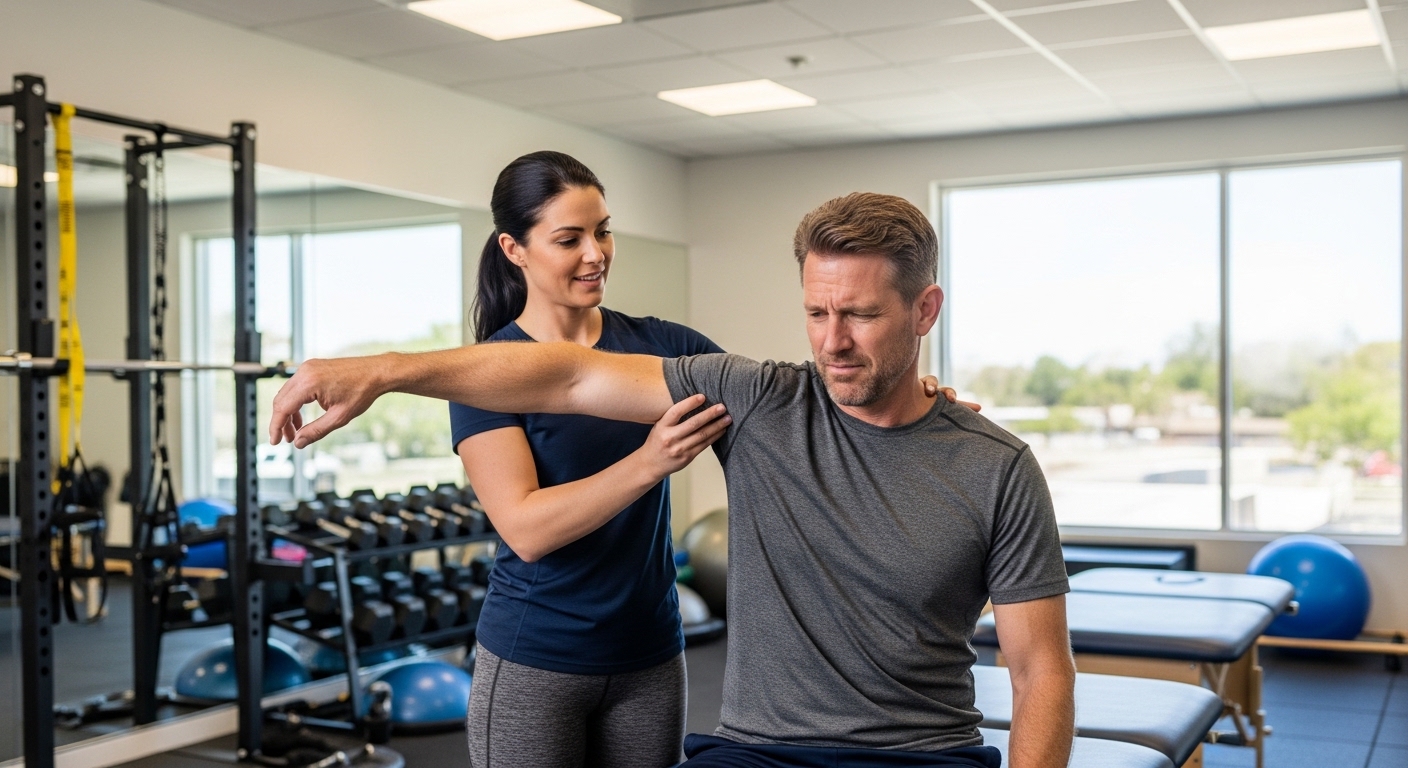
We will conduct a comprehensive evaluation that includes a thorough history and movement assessment of the shoulder, spine, and hips in particular. We will identify how your joints move in relation to one another to ensure we identify any restriction or limitation that may be contributing to your condition.
In addition, we will test your shoulder and shoulder blade strength, range of motion, and how they work together in different positions. We will also look for any other contributing factors throughout the body that may play a role in your pain or limitation. This information will help determine any weaknesses and/or compensations that may impair your ability to swing correctly.
Your physical therapist will design a program tailored to your individual needs. This program will consist of hands-on manual therapy to alleviate any soft tissue restriction as well as flexibility/mobility, strength, and power training to correct faulty movement patterns to help resolve your injury and improve your overall performance.
We will use a variety of techniques, including Kinesio Taping and manual therapy, to assist your rehabilitation and education on proper movement sequencing. Our team will show you how to warm up, including mobility and theraband work, to enhance your performance so you can hit the ball with greater confidence!
Request An Appointment At Vibrant Health Solutions/TherapyWorks Today!
Our physical therapists are highly skilled at treating golfers. No matter what is causing your shoulder pain, we offer the results you are looking for!
Sources:
https://www.jospt.org/doi/full/10.2519/jospt.2020.8498, https://www.sciencedirect.com/science/article/abs/pii/S097656622030357X, https://journals.sagepub.com/doi/abs/10.1177/0269215520971764, https://www.hindawi.com/journals/bmri/2021/9945775/, https://journals.humankinetics.com/view/journals/jsr/29/4/article-p425.xml, https://www.researchgate.net/profile/VisheshSinghal/publication/357269009_A_DESCRIPTIVE_STUDY_ON_GLENOHUMERAL_ROTATIONS_AND_HORIZONTAL_ADDUCTION_OF_SHOULDER_JOINT_IN_MALE_GOLFERS/links/61c414a5c99c4b37eb1870d7/A-DESCRIPTIVE-STUDY-ON-GLENOHUMERAL-ROTATIONS-AND-HORIZONTAL-ADDUCTION-OF-SHOULDER-JOINT-IN-MALE-GOLFERS.pdf

Getting Ready for Yard Work and Gardening: Take These Steps
- Prep Your Tools: Ensure your garden tools are clean and sharpened.
- Safety Gear: Remember to wear appropriate safety gear like gloves, sunblock, and a wide-brimmed hat to protect yourself. Also consider using knee cushions or a low stool to reduce prolonged pressure or bending in your knees and back.
- Stretch It Out: Begin with gentle stretching exercises to warm up your muscles and prevent injuries.
- Plan Your Tasks: Prioritize tasks by starting with lighter tasks before tackling heavy lifting or digging.
- Proper Posture: Maintain good posture and bend your knees when lifting to prevent back strain.
- Stay Hydrated: Keep a water bottle handy and take breaks, especially on hot days.
- Know Your Limits: Don’t push yourself too hard. Listen to your body and take breaks when needed.
- Mulch and Weed Control: Apply mulch to reduce weeds and moisture loss in the soil, making future yard work easier.
- Proper Lifting: Use your legs when lifting heavy objects and keep the object close to your body to reduce strain.
- Enjoy the Process: Take time to appreciate your efforts and the beauty of your outdoor space.
We’ve Moved!
We’re excited to share some big news. Our clinic has officially moved into an upgraded space! You can now find us at:
4931 W 6th Street, Ste 116, Lawrence, KS
Thank you for your patience as we made this transition. We’re getting settled into our new location and couldn’t be more thrilled to welcome you here. Whether you’re a new, present, or returning patient, we can’t wait to see you in the new space!

FREE Workshop
Shoulder Pain and Rotator Cuff Webinar
May 6th
Shoulder Pain and Rotator Cuff Webinar • 6:30
With Cindy Johnson, M.S. P.T., MCMT, Owner/Director
FREE Workshop
Back Pain and Sciatica Webinar
May 20th
Back Pain and Sciatica Webinar • 6:30
With Cindy Johnson, M.S. P.T., MCMT, Owner/Director
Patient Success Story
“A++! Their team is and always has been very professional and welcoming. Over the years I’ve been prescribed physical therapy a number of times and Vibrant Health Solutions/TherapyWorks has always lived up to their name. I’m pleased and highly recommend.”
— 5-Star Review
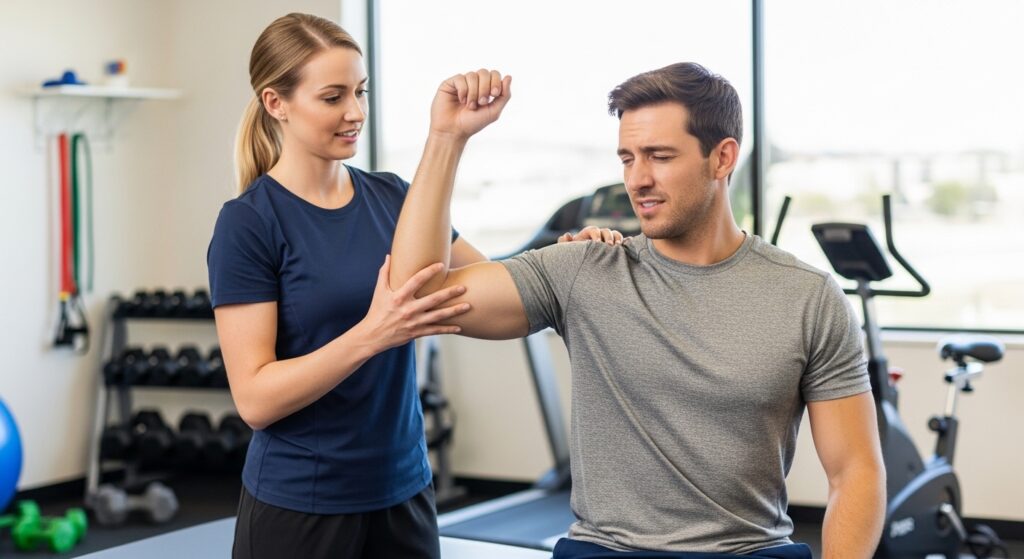
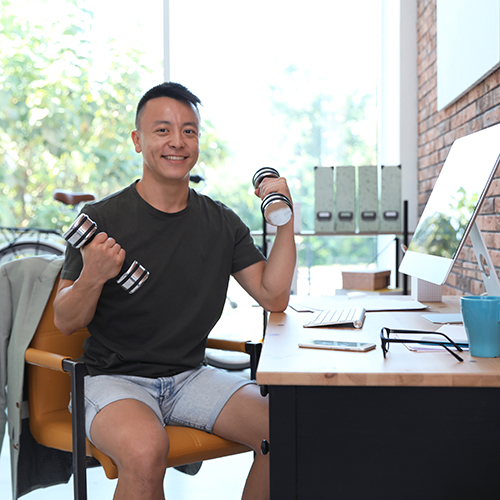
At Vibrant Health Solutions/TherapyWorks, we want to help everyone get active in the ways that work for them. Call us today for personalized guidance on what will work best for you!
Healthy Recipe
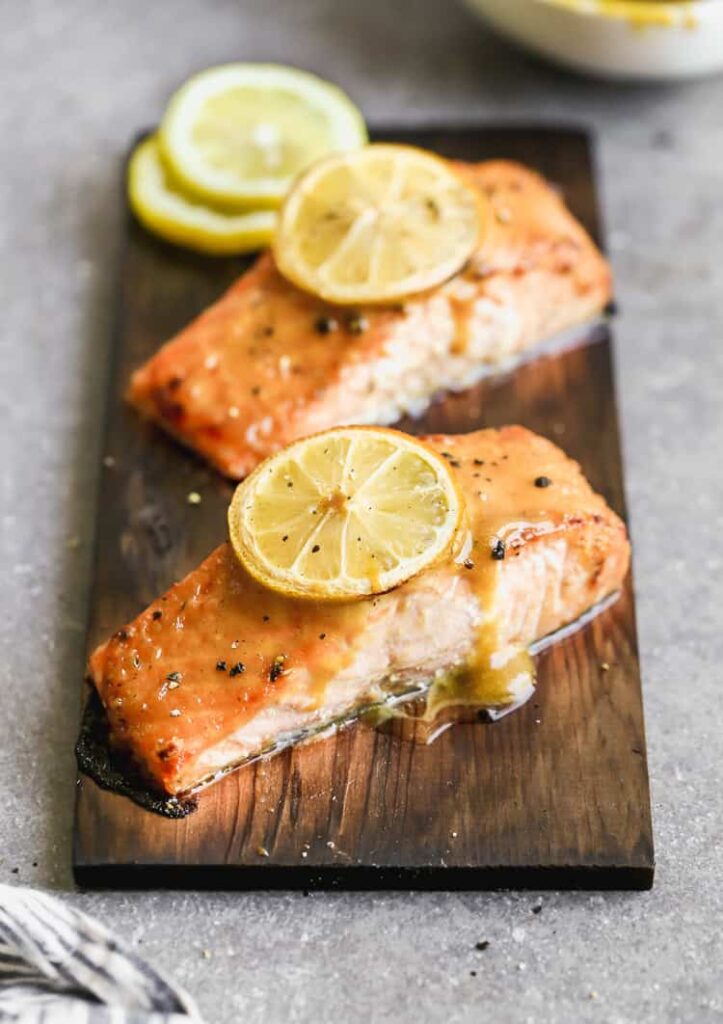
Cedar Planked Salmon
For the Sauce:
- 3 (12-inch) untreated cedar planks
- ⅓ cup soy sauce
- ⅓ cup vegetable oil
- 1 ½ tablespoons rice vinegar
- 1 teaspoon sesame oil
- ¼ cup chopped green onions
- 1 tablespoon grated fresh ginger
- 1 teaspoon minced garlic
- 2 (2-pound) salmon fillets, skin removed
Instructions:
- Gather all ingredients.
- Soak cedar planks for at least 1 hour in warm water. Soak longer if you have time.
- Stir soy sauce, vegetable oil, rice vinegar, sesame oil, green onions, ginger, and garlic together in a shallow dish.
- Place salmon fillets in soy mixture and turn to coat. Cover and marinate for at least 15 minutes, or up to 1 hour refrigerated.
- Preheat an outdoor grill for medium heat. Place planks on the grill grate. Heat planks until they start to smoke and crackle just a little.
- Remove salmon from marinade and place on planks; discard marinade.
- Close grill cover. Grill salmon until it flakes easily with a fork, about 20 minutes; salmon will continue to cook after you remove it from the grill.
Exercise of the Month
Dumbbell Front Raise
(Shoulders)
Stand tall with a dumbbell in each hand, arms resting in front of your thighs and palms facing your body. Keeping your arms straight (but not locked), slowly raise both arms in front of you to shoulder height. Pause briefly, then lower back down with control.
3 Sets, 10 Reps. (Materials needed: dumbbells)